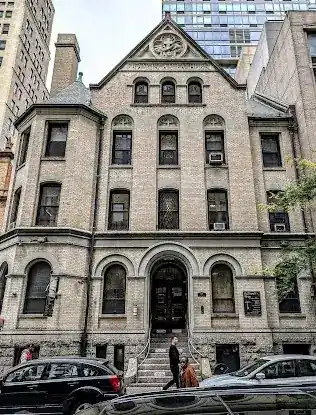
Holy Cross Convent (former)
About
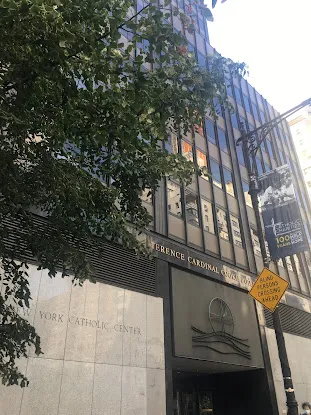
Holy Cross Convent, a former religious organization located at 460 W 44th St New York, NY 10036, holds a distinguished place in Midtown Manhattan’s cultural and historical landscape. Established as a beacon of faith and community service, this site once served as a dynamic center for spiritual guidance, education, and social outreach. Its legacy reflects a commitment to fostering unity and compassion within the diverse neighborhoods it once supported. The property’s strategic location in Midtown Manhattan underscores its historical significance, blending urban accessibility with a serene environment conducive to reflection and collective growth.
Holy Cross Convent operated as a religious institution, embodying the values of service, humility, and spiritual leadership. While the building no longer functions as an active church, its architectural and historical presence continues to resonate with locals and visitors alike. The site’s transformation over time highlights the evolving nature of religious and communal spaces in New York City, where former institutions often adapt to meet contemporary needs while preserving their heritage. The structure’s design and surroundings remain a testament to its past, offering a tangible link to the city’s religious history.
Situated in the heart of Midtown Manhattan, the address 460 W 44th St New York, NY 10036 places Holy Cross Convent within a vibrant district known for its blend of commerce, tourism, and residential life. This location ensures the site remains accessible to a wide audience, bridging the gap between the city’s bustling energy and the quiet dignity of its former purpose. The property’s proximity to major landmarks and transit hubs further enhances its visibility, making it a notable point of interest for those exploring New York’s architectural and cultural tapestry.
With a 5.0/5 rating, Holy Cross Convent is celebrated for its enduring impact on the community it once served. Visitors and historians alike recognize its contributions to New York’s religious and social fabric, particularly in the context of its historical role in shaping local identity. The site’s preservation and continued relevance reflect a deep respect for its legacy, ensuring that future generations can appreciate its significance. As a former religious organization, it stands as a symbol of resilience and adaptation, embodying the spirit of New York’s ever-changing urban landscape.