Alessandro Zanoni, Licensed Psychoanalyst and Certified Gestalt Therapist in New York.
Business Details
About
Psychotherapy in New York isn’t a monolith—approaches vary as widely as the city’s neighborhoods. While some practitioners lean into cognitive-behavioral frameworks or brief solution-focused models, others delve deeper into the relational and experiential. Alessandro Zanoni falls into the latter camp, offering a practice rooted in psychoanalytic tradition and Gestalt therapy, two modalities that prioritize the unconscious and the present moment, respectively. This isn’t about quick fixes or symptom checklists; the work here assumes that lasting change often requires exploring the layers beneath immediate concerns, from recurring emotional patterns to the way past experiences shape current relationships.
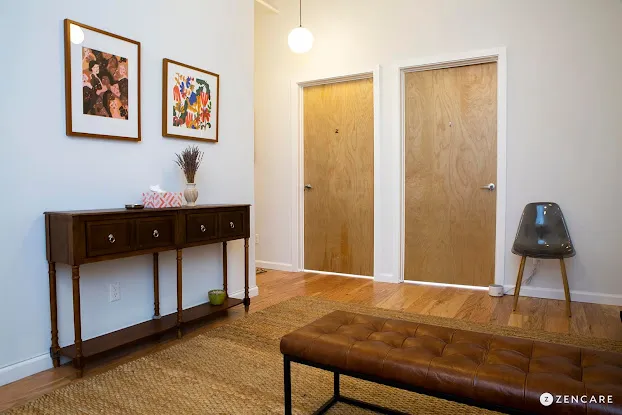
The office sits on East 28th Street between Madison and Park Avenues, a stretch of Midtown South that’s quieter than its tourist-heavy neighbors but still humming with the rhythm of a city where therapy is as routine as coffee runs. Psychoanalysts and Gestalt therapists aren’t exactly rare in New York, but finding one who integrates both—particularly with formal certification in the latter—can narrow the field. Sessions here might unfold through dialogue, dream analysis, or experiments designed to heighten awareness of bodily sensations and relational dynamics. The goal isn’t just insight but a shift in how clients embody their lives, a distinction that matters in a field where talk alone can sometimes feel abstract.
Logistics are straightforward: the full address is E 28th St, New York, NY 10016, and the phone line for scheduling or questions is (646) 846-0657. Unlike group practices or clinics, this is a solo operation, which can appeal to those who prefer consistency in their therapeutic relationship. Gestalt therapy, in particular, thrives on the immediacy of the therapist-client interaction—something that’s harder to maintain when sessions bounce between different practitioners. That said, the approach isn’t for everyone; it demands a willingness to tolerate ambiguity and sit with discomfort, which might explain why it’s often sought out by creatives, professionals in high-stakes fields, or anyone who’s hit a wall with more structured modalities.
The area itself is a mix of residential brownstones, medical offices, and the occasional boutique hotel—practical for clients coming from uptown or downtown, though public transit is the obvious choice. For exact directions or to scope out the walk from the nearest subway, the map pinpoints the location without ambiguity. Therapy, at its core, is about showing up—both literally and metaphorically—and in a city where even the simplest errands can feel like a production, knowing the route beforehand is one less variable to worry about.